

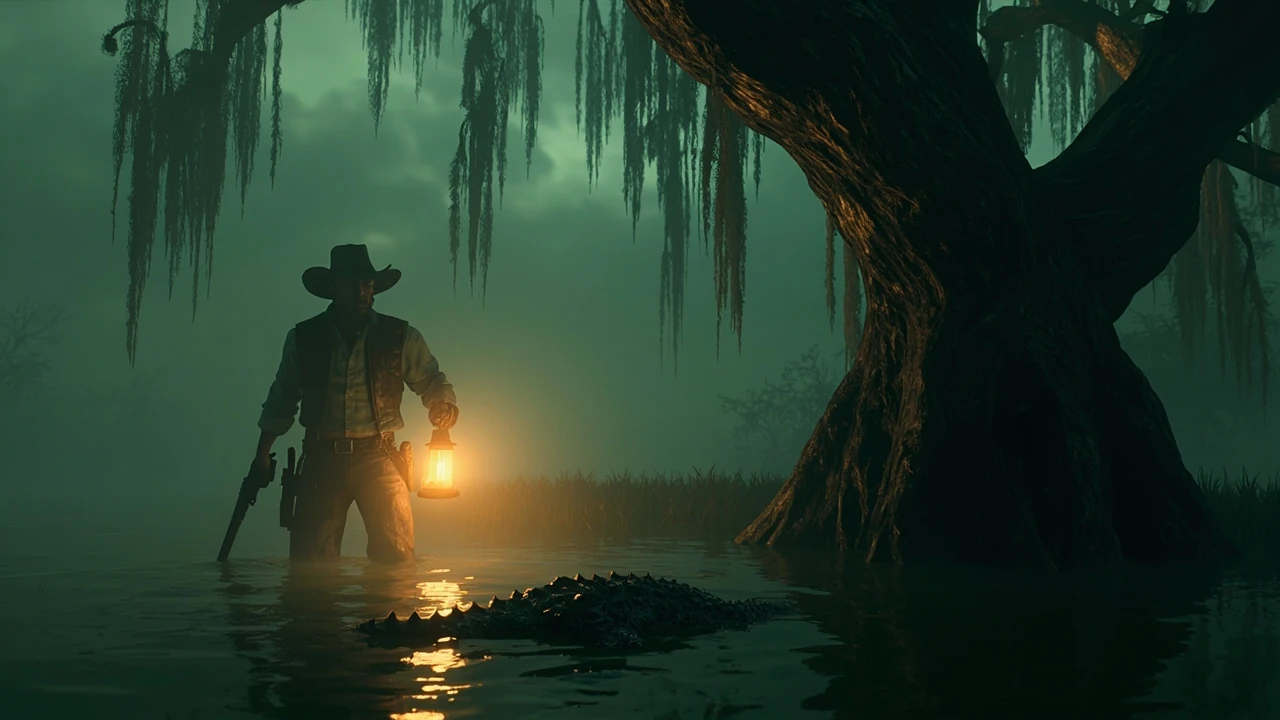
Legendary Gator in Red Dead Redemption 2: where it spawns, how to hunt it, and what to do with the loot
The legendary gator rdr2 players ask about sits somewhere between a curiosity and a checklist item. It is one of the most awkwardly placed legendary animals in the open world, mostly because the bayou north of Saint Denis behaves very differently from the rolling hills of New Hanover where most players cut their teeth on hunting. The animal is real, it is documented, and it drops a small but genuinely useful set of rewards once you bring it down. The hard part is reaching it, surviving the encounter, and not wasting the carcass because you skinned it in the wrong place or at the wrong time.
This walkthrough covers the spawn area in the Bayou Nwa and the surrounding wetlands, the right loadout before you cross the water, the cleanest way to land the kill, and the full list of items the legendary gator produces through Pearson’s camp butchery and the Fence. It also covers the small but consistent bugs that can soft-lock the encounter, the difference between a regular large alligator and the legendary variant, and where this hunt fits in a broader naturalist or completionist run. If you only have one evening to chase it, the section on the loadout and the timing of the approach is the part to read first.
What the legendary gator actually is
What separates it from a regular large alligator is not just the size. The legendary variant has its own entry in the Compendium, its own Animal Field Sample entry, and its own carcass model once skinned. The map also has a permanent question mark removed from the area once the encounter is over, even if the player reloads a save, which means a failed attempt still consumes the spawn until the next in-game day or the next session. The Compendium reward for a clean entry is a small amount of cash and a permanent bonus to the player’s own compendium progress, while the field sample opens the option to craft the Legendary Alligator Tooth trinket at the Fence.
The animal itself draws on the same nuisance wildlife model used for the standard alligators in the bayou. Its behavior is also similar: it will slide into the water if shot at from long range, and it will charge if the player gets too close on land. The main differences are the damage it absorbs before going down, the slightly larger aggro radius compared to a regular gator, and the way the in-game music shifts when the player enters the legendary spawn radius. None of that is required reading for the kill, but it helps explain why the encounter feels heavier than the random alligator attacks players stumble into while fishing or moving between missions.
Where to find the legendary gator
The legendary gator lives in the swampy stretch of the map just north of Saint Denis, in the area most players know as Bayou Nwa. The exact spawn point is on the eastern bank of the larger river that cuts through the bayou, roughly between the Kamassa River fork and the small island that holds the old cabin used in the chapter four mission “The Blood Gun of Usher.” It is the same general region where the gang camps at Shady Belle, and it is also where several random ambushes and stranger missions tend to trigger, so the area already has a reputation for pulling players off the main path.
The cleanest way to reach the spawn on foot is to fast travel to the Rhodes saloon or to the Braithwaite Manor waypoint, then ride south toward the Lannahechee River. From there the road bends east, and the bayou opens up into a flatter, wetter stretch with fewer trees and a lot of standing water. The legendary spawn is near a particularly wide section of the river where two channels meet, with a low muddy bank on the south side and a slightly raised ridge on the north side. The Animal Field Sample drawing you get from Harriet after donating the regular alligator sample points to this exact area on the in-game map, which is the most reliable indicator that you are in the right place.
Players coming in from the New Hanover side usually approach through the long road that runs from Rhodes to Saint Denis, cross the bridge, then turn north as soon as the road dips into the swamp. The drawback of that route is that the alligators here are not the only threat. There are also random ambushes by the Murfree Brood on the western edge of the bayou, and a steady supply of snakes in the tall grass. A second approach is to take the river itself: ride along the bank from the docks east of Saint Denis, follow the water north, and look for the wider pool where the legendary gator normally sits. This route takes longer, but it avoids most of the ambush points.
It is worth saying out loud: the spawn is not on a marker. The Animal Field Sample places a vague circle on the map, not a precise icon, and the gator does not appear until the player gets close enough to trigger the encounter. If you arrive in the area and nothing happens, the usual reasons are the time of day, the weather, the player’s current bounty level, and whether another legendary animal is already active in the player’s session. The game only handles one legendary encounter at a time, so chasing the legendary gator while another legendary spawn is in the same play session will silently defer it.
When the legendary gator spawns
The legendary gator has the same loose time-of-day rules as the other swamp-dwelling legendaries. It can appear at any time, but it is most reliable between roughly 06:00 and 20:00 in-game. The gator will not spawn during heavy rain, and it tends to appear more often when the player is on foot rather than on horseback, because the aggro radius for the encounter is shorter than the regular aggro radius for a standard alligator.
Players who have trouble getting the spawn to trigger usually solve the problem by doing one of three things. The first is to sleep or fast travel at least a full in-game day away and back, which forces the legendary rotation to refresh. The second is to clear any active bounties or hostile witnesses, since a wanted status can suppress some legendary spawns in regions with a heavy law presence. The third is to enter the bayou from a different direction, because the game tracks which spawn point the player is approaching from and will sometimes cycle the encounter to a nearby zone if the player is already in aggro range of a different animal.
There is also a soft seasonal component. The legendary gator is more likely to appear during the in-game spring and summer months, which match the chapters of the story where the gang is in the bayou region. During the epilogue, which is set several years later, the spawn still works, but the surrounding wildlife density is a little lower, which can make the aggro radius feel inconsistent. None of this is required reading, but it does explain why two players can ride to the same coordinates and get very different results.
Loadout, weapons, and consumables to bring
The legendary gator is one of the more forgiving legendary animals in terms of weapon choice, but the bayou itself is not. The right loadout is built around the terrain, not the gator. The encounter takes place in standing water with limited cover, and the player will usually be close enough that a long scope is more of a liability than a benefit. The recommended kit below covers the weapons, the consumables, and the small quality-of-life items that turn a frustrating attempt into a clean kill.
| Slot | Recommended item | Why it matters |
|---|---|---|
| Primary rifle | Springfield Rifle or Bolt-Action Rifle | Enough stopping power to drop the gator in one or two shots if the player lands a clean head or heart hit from range. |
| Backup sidearm | Schofield Revolver or Mauser Pistol | Useful for finishing the kill if the gator charges, and for dealing with the regular alligators that wander into the encounter. |
| Thrown weapon | Improved Tomahawk or Throwing Knives | Optional, but a clean tomahawk hit to the head from close range will instantly down the legendary gator and skip the chase. |
| Consumable | Potent Snake Oil or Special Snake Oil | The bayou is full of snakes; one bite can drain a large chunk of the player’s cores before the gator even spawns. |
| Consumable | Potent Bitters or Special Bitters | Restores the stamina core during the chase, which is the limiting factor for most players who try to run the gator down on foot. |
| Consumable | Plain Potent Health Cure | Stacks with health tonics and is useful if the gator lands a bite before going down. |
| Horse | Turkoman or any horse with high stamina and a calm temperament | The horse will be parked on the bank; a calm horse will not bolt when the gator roars. |
Two smaller pieces of kit are easy to forget. The first is a small amount of regular ammo for the rifle, because the legendary gator will not respond to a single empty chamber. The second is at least one piece of cooked meat or a snack that restores the stamina core, because the chase phase of the encounter can drain it before the player even lands a finishing shot. A Lantern is optional but useful if the player is hunting the gator at night, which the encounter allows but most players avoid.
It is also worth saying: do not bring explosive ammo. The Springfield rifle with explosive rounds will one-shot the gator, but it will also destroy the skin, which removes the legendary status and turns the kill into a standard alligator carcass. The same applies to the Elephant Rifle and the high-power sniper options. The right approach is the rifle with regular or split-point ammo, paired with patience.
Step-by-step: how to kill the legendary gator
Step one: ride into the bayou from the south, park the horse on the high ground, and continue on foot. The legendary gator spawns on a short aggro leash, and a horse walking through the encounter radius will sometimes suppress the spawn until the next in-game day. If you are playing with a friend in co-op, it is fine to bring two horses, but the second player should also dismount before approaching the water.
Step two: move into the wider pool slowly. Listen for the low gator call and watch for the water ripples that mark its position. The legendary gator usually starts in the water, close to the south bank, and will submerge for a few seconds at a time before surfacing. The Compendium entry for the regular alligator suggests the species is most active in the early morning, which is also the best time to find the legendary variant.
Step three: when the gator is in the water and facing away from you, land a clean shot with the Springfield or Bolt-Action Rifle. The ideal hit is a headshot, which will down the legendary gator in a single shot. A clean body shot will also work, but it will trigger a brief chase phase, during which the gator slides back into the water and resurfaces a short distance away.
Step four: if the chase phase triggers, do not chase the gator on horseback. Stay on foot, follow the water trails, and reload before re-engaging. The legendary gator has slightly more health than the standard alligator, and a missed follow-up shot will lengthen the chase rather than shorten it. A second rifle round to the head or a clean Improved Tomahawk throw will end the encounter.
Step five: skin the gator immediately. The legendary gator’s skin is part of its named loot, and it will not respawn if the player leaves the area and returns. The standard skinning animation takes a few seconds and works the same way as skinning a regular gator, but the resulting Legendary Alligator Skin is heavier and must be carried on the horse, not in the satchel.
The legendary gator is a named variant of the American Alligator, the same species you can find sunning itself on logs and sliding through the reeds around Bayou Nwa and the eastern edge of the map. Rockstar designed it as one of the sixteen legendary animals added to Red Dead Redemption 2‘s Story mode, and it sits firmly in the “awkward to solo” tier alongside the legendary cougar and the legendary bull gator. In mechanical terms it is a larger, tougher alligator with a unique skin, a guaranteed spawn within a defined area, and a fixed loot table that the game only unlocks after a clean kill.
Step six: take the skin to Pearson at camp, or to the Trapper, depending on what you want to do with it. The legendary gator’s full loot table is split between two vendors, and you only get the full set if you visit both.
Legendary gator loot table
The legendary gator produces three named items when skinned. The Legendary Alligator Skin is the main item, and it is the one that drives the rest of the loot table. The Legendary Alligator Tooth is a separate drop that only appears in the player’s satchel if the player has already donated a regular alligator sample to Harriet, which is a small but real gate on the encounter. The third drop is a single unit of the Big Game Meat, which cooks into the same meal as the standard big game variants and is not unique to the legendary gator, but is still worth picking up if the player’s provisions are low.
| Item | Where to take it | What you can craft or unlock |
|---|---|---|
| Legendary Alligator Skin | Pearson at camp, or any Trapper | Legendary Alligator Vest, Legendary Alligator Gambler Vest, Legendary Alligator Flank Saddle, Legendary Alligator Half Chaps, Legendary Alligator Poncho (Outlaw Pass 7 reward in Red Dead Online, not Story mode). |
| Legendary Alligator Tooth | The Fence | Legendary Alligator Tooth trinket, which gives a permanent bonus to the player’s resistance to alligator attacks for the rest of the playthrough. |
| Big Game Meat | Camp stew pot, or cooked directly | Cooked Big Game Meat, which restores a moderate amount of the stamina and health cores and is required for several of Pearson’s camp upgrades. |
The trinket is the part most players care about. The Legendary Alligator Tooth reduces the damage the player takes from alligator bites for the rest of the playthrough, which is genuinely useful during the bayou missions and during the random ambushes that happen in the swamp. The vest and the half chaps are mostly cosmetic, but they are also the only way to get the legendary alligator look in Story mode without using mods. The saddle is one of the heavier crafting items in the game and is worth holding onto if the player plans to ride a high-stat horse later in the chapter.
It is worth noting that the trinket is a one-time craft, and the materials to make it are consumed when the player buys it from the Fence. The legendary skin, on the other hand, can be re-crafted at the Trapper, and the player’s inventory will keep a single copy of the skin in the satchel as long as the player does not drop it on the ground or sell it. This is the part of the loot table that trips up players who try to be efficient by skipping the Fence step and going straight to the Trapper.
Common problems and how to fix them
The legendary gator has a small handful of recurring issues that show up in the same places across different playthroughs. None of them are showstoppers, but each one can cost the player a clean kill if it is not handled before the encounter starts.
The first is the spawn problem. The gator is genuinely in the right place, but the encounter does not trigger. The fix is to leave the area, fast travel to a different region, and return. The legendary rotation refreshes when the player crosses a regional boundary, and the gator will usually spawn on the second or third pass.
The second is the chase problem. The gator goes down after a body shot but resurfaces a short distance away and refuses to die. The fix is to stop chasing and let the animal come back to the player’s aggro radius. The legendary gator has a slightly larger leash than the regular alligator, and trying to chase it through the water usually ends with the player waist-deep in the swamp with no stamina left.
The third is the skinning problem. The gator dies, but the skin option does not appear. The fix is to make sure the player is the one who lands the killing blow, and that no companion or horse has moved into the aggro radius. If the gator dies from a fall, an environmental hazard, or a horse stomp, the legendary status is lost and the carcass turns into a standard alligator skin.
The fourth is the sample problem. The player has not donated a regular alligator sample to Harriet, so the legendary tooth does not appear in the satchel. The fix is to back out of the bayou, donate the sample, and return. The encounter will still register, but the tooth will only drop after the donation step is complete.
The fifth is the co-op problem. The legendary gator is tuned for solo play, and a co-op session can desync the encounter. The fix is to either play the encounter solo, or to have one player stay on the bank while the other player crosses the water. The encounter only counts the player who lands the killing blow, and a shared kill does not always drop the skin.
Tips for a clean first attempt
The cleanest first attempt comes from preparation, not reaction. The list below is short, but each step is the part of the encounter that turns a lucky kill into a reliable one. Players who are chasing the legendary gator on a completionist run usually do these in the same order every time.
- Donate the regular alligator sample to Harriet before approaching the bayou. It is a one-time cost, and it unlocks the tooth drop on the legendary kill.
- Approach on foot from the south bank. The legendary gator spawns closer to the river than the standard alligators, and the south bank has a clearer line of sight.
- Park the horse on the high ground. A calm horse will not bolt when the gator roars, and a panicked horse will pull the player’s aggro away from the water.
- Bring at least one throwing weapon. A clean tomahawk throw to the head will end the encounter in a single hit, which is the fastest way to skip the chase phase.
- Do not chase the gator into deeper water. The stamina drain is steeper in the bayou than in the open plains, and the chase is the part where most first attempts fail.
- Skin the gator immediately, and carry the skin on the horse. The legendary skin is heavy, and the satchel does not have a slot for it.
- Visit the Fence before the Trapper. The trinket is the part of the loot table that most players forget about, and it is the most useful reward from the encounter.
How the legendary gator fits into a broader run
The legendary gator is one of the late-game legendary animals, and it is best approached as part of a larger run rather than a one-off trip. The completionist path usually goes through New Hanover first, then down into Lemoyne, and finally into the bayou, with the legendary gator as the closer before the player moves on to the legendary animals of the Grizzlies and the mountains to the north.
For players who are running a naturalist playthrough, the legendary gator is also a good bridge between the bayou missions and the trapper sets that require multiple legendary skins. The legendary alligator skin is one of the cheaper trapper materials, and the vest and the half chaps that come out of it are usable in the early chapters. The trinket, in particular, is useful for the rest of the run because it softens the random alligator ambushes that players tend to walk into while exploring the rest of the bayou.
For players who are running a co-op playthrough, the legendary gator is one of the encounters that benefits the most from splitting the aggro. One player can pull the gator onto the bank while the other player lands the killing shot from a safe distance, and the legendary status will still register on the player who lands the shot. The main thing to avoid is having both players chase the gator into the water, which usually ends with both players losing stamina and the gator escaping.
For players who are running a low-level challenge run, the legendary gator is one of the few legendaries that is genuinely doable with the basic weapons. The encounter rewards patience more than firepower, and a low-level player with a Springfield rifle and a steady hand can usually take the gator down on the first attempt. The harder part of the run is the bayou itself, which is full of high-level enemies and random ambushes regardless of the player’s own level.
What to do after the kill
Once the legendary gator is down and the skin is on the horse, the player’s next stop is the Fence. The trinket recipe is the only use for the legendary alligator tooth, and the Fence is the only vendor who carries it. The trinket itself is a passive equip that reduces alligator bite damage, and it does not need to be re-crafted. After the trinket is bought, the player can take the skin to Pearson at camp, or to any Trapper, and pick the cosmetic item they want.
Most players will also want to revisit the Compendium at this point. The legendary gator’s Compendium entry is a separate page from the regular alligator’s, and filling it in gives a small cash reward and a permanent boost to the player’s compendium progress. The Compendium is also a useful check on whether the kill was clean: if the entry does not appear, the kill was probably not a legendary, and the player will need to retry.
After that, the player can move on to the next legendary animal, or return to the main story missions. The legendary gator does not gate any story content, and it is not required for any of the stranger missions in the bayou. It is, however, a soft prerequisite for some of the trapper sets that require the legendary alligator skin, and it is one of the named animals that the player needs to find for the “Zoologist” achievement on the in-game list, which requires all Compendium entries to be filled in.
Quick reference table: legendary gator at a glance
| Field | Value |
|---|---|
| Animal type | Legendary variant of the American Alligator |
| Region | Bayou Nwa, north of Saint Denis |
| Recommended level | Chapter 4 or later, ideally after donating the regular alligator sample to Harriet |
| Best time of day | Early morning, 06:00 to 09:00 in-game |
| Best weapon | Springfield Rifle with regular ammo, or Improved Tomahawk |
| Weakest hit | Headshot with a rifle |
| Skin drop | Legendary Alligator Skin |
| Tooth drop | Legendary Alligator Tooth (gated by the regular alligator sample donation) |
| Trinket | Legendary Alligator Tooth, bought at the Fence |
| Crafted gear | Legendary Alligator Vest, Gambler Vest, Half Chaps, Flank Saddle |
| Co-op friendly | Yes, but the player who lands the killing shot is the only one who gets the skin |
| Respawns | No, this is a one-time encounter per playthrough |
That table is the part to keep open on a second monitor or a phone while running the encounter. It is also the part to send to a friend who is starting their own run and wants a single screen to glance at. The rest of the article is the longer version of the same information, with the kind of small details that matter on a first attempt but do not need to be re-read on later runs.
Frequently asked questions
Where exactly does the legendary gator spawn in Red Dead Redemption 2?
The legendary gator spawns in Bayou Nwa, just north of Saint Denis, in the wider section of the river that sits between the Kamassa River fork and the small island with the old cabin from the chapter four mission “The Blood Gun of Usher.” It is a vague circle on the map, not a precise icon, and the encounter only triggers when the player is on foot within that circle.
What chapter should I be in to hunt the legendary gator?
Chapter 4 is the earliest chapter where the encounter is fully wired, and that is also the chapter where the gang camps at Shady Belle, which is the closest fast travel point. The encounter still works in the epilogue, but the surrounding wildlife density is lower, which can make the aggro radius feel inconsistent.
Do I need to donate a regular alligator sample to Harriet first?
Yes, if you want the Legendary Alligator Tooth to drop. The tooth is what unlocks the trinket recipe at the Fence, and the trinket is the most useful reward from the encounter. The skin and the trapper gear still drop without the sample, but the tooth is gated by the donation step.
What is the best weapon to use against the legendary gator?
The Springfield Rifle with regular or split-point ammo is the safest pick. A clean headshot will drop the gator in a single shot, and a clean body shot will trigger a short chase phase that ends with a follow-up rifle round. The Improved Tomahawk is also a strong pick if you can get close enough, and it skips the chase entirely.
What happens if I use explosive ammo on the legendary gator?
Explosive ammo will destroy the skin, which removes the legendary status and turns the kill into a standard alligator carcass. The Compendium entry will not register, the tooth will not drop, and the trapper recipes that require the legendary alligator skin will not unlock. It is worth the small extra effort to use regular ammo.
Can I hunt the legendary gator in co-op?
Yes, but the encounter is tuned for solo play. The cleanest approach is to have one player pull the gator onto the bank while the other player lands the killing shot. The legendary status only registers on the player who lands the killing blow, so the second player should focus on support rather than damage.
Does the legendary gator respawn if I reload a save?
No, the legendary gator is a one-time encounter per playthrough. The map will keep the spawn circle visible, but the animal will not return. If the kill fails, the player can retry after leaving the area and fast traveling back, but a successful kill removes the spawn permanently.
What is the Legendary Alligator Tooth trinket actually useful for?
It reduces the damage the player takes from alligator bites for the rest of the playthrough. It is a passive equip that does not need to be re-crafting, and it is one of the few trinkets that is genuinely useful during regular play rather than just for cosmetic reasons. It is especially helpful during the bayou missions and during random ambushes in the swamp.
Where do I take the legendary gator skin?
You can take the legendary alligator skin to Pearson at camp, or to any Trapper. Pearson unlocks the camp stew upgrades that require big game meat, and the Trapper unlocks the cosmetic gear recipes. Most players visit both, in that order, to get the full loot table.
Will the legendary gator spawn during the epilogue?
Yes, the encounter is still active in the epilogue, which is set several years after the main story. The bayou is calmer, and the surrounding wildlife density is a little lower, but the spawn still works, and the loot table is identical. It is one of the easier legendaries to clean up during the epilogue, and it pairs well with the other bayou-based encounters in that part of the game.





Leave a Reply