

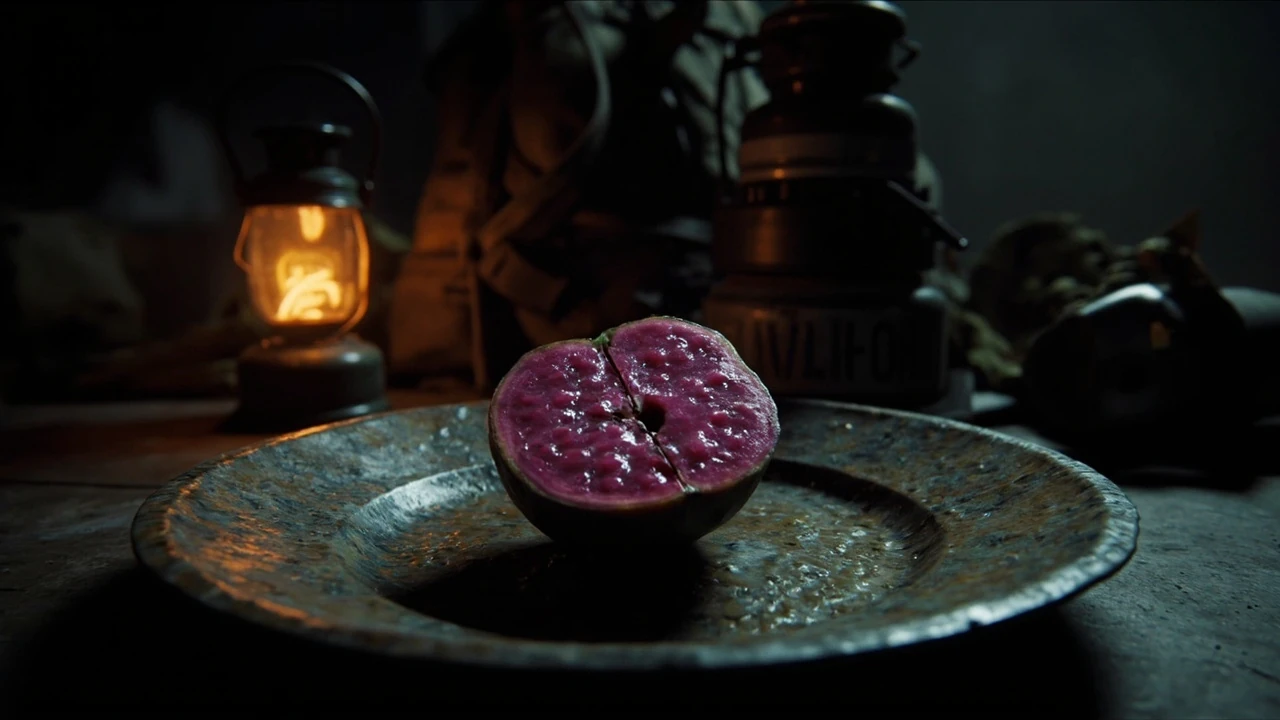
Prickly pear in Arc Raiders: what it actually does in a raid
Prickly pear is one of the consumable healing items you can carry into a raid in Arc Raiders, the extraction shooter developed by Embark Studios. The tooltip describes it as a small food that restores a sliver of health and removes one soft status effect, which is accurate but undersells the design intent. The item sits at the bottom of the healing curve, costs almost no weight or slot pressure, and is built to be eaten between fights rather than during one. Arc Raiders uses prickly pear to make the cheapest option feel like a real choice instead of a placeholder.
The rest of this article walks through the actual numbers, the tier list it sits in, the status effects it does and does not clear, and the squad and solo loadouts where it earns a slot. It also covers the design choices behind the item for readers who want to understand how a tier 1 consumable can carry weight in an extraction shooter without breaking balance.
Stat block and basic mechanics of prickly pear in Arc Raiders
The numerical side of the consumable is short, but the way those numbers interact with the rest of the survival loop is what makes the item worth thinking about. Prickly pear heals a small amount of health over a short window and removes or reduces one soft status effect. It is not a revive, it is not an anti-bleed coagulant, and it does not restore stamina. It is a low-grade healing consumable with a single targeted side benefit.
| Attribute | Value or behaviour | Design intent |
|---|---|---|
| Item type | Consumable, food category, healing tier 1 | Cheap recovery that competes with canteens and ration bars |
| Primary effect | Restores a small amount of health over a few seconds | Encourages use between engagements, not mid-fight |
| Secondary effect | Reduces one soft status condition such as mild thirst or light fatigue | Rewards planning around minor penalties rather than hard ones |
| Use time | Short channel, can be interrupted by taking damage | Keeps consumables vulnerable in active combat |
| Stack size | Multiple per inventory slot, generous cap | Forces trade-offs with weight and slot efficiency |
| Weight cost | Very low compared with canteens and medical stims | Makes it attractive for long extractions with light kit |
| Availability | Common on lower-difficulty maps, occasional on higher tiers | Reinforces its role as a baseline consumable rather than a prize |
| Extraction value | Low; rarely worth banking for trade | Discourages hoarding for vendor runs |
The heal number is small enough that two prickly pears in a row do not replace a single canteen, which is the point. The item cannot trivially substitute for better healing tools. If a player needs to clear a serious wound, a stim or a medkit is the appropriate tool. Prickly pear is for the moments when the player is alive, not under fire, and just needs to top up after a long walk between objectives.
The use time also tells a story. Because the channel can be interrupted, the item is unsafe to use while you are being shot at, and that is consistent with the broader Arc Raiders design pattern. Healing actions carry a real risk of being cancelled, and players are expected to find cover, weigh the encounter, and only then commit to a channel. Prickly pear sits in the lightest tier of that risk model.
Where prickly pear fits in the Arc Raiders healing tier list
Arc Raiders stacks its consumables into roughly four tiers, and a new player who only reads tooltips can easily miss how those tiers interact. Prickly pear sits at the bottom of that ladder, which is why it is sometimes dismissed as a noob item. In a careful kit, however, it has a place.
- Tier 1, field foods: prickly pear, ration bars, basic water. Cheap, low weight, restores a small amount of health and clears minor status effects. Good for top-ups between fights.
- Tier 2, medkits and stims: trauma kits, stimulant injectors, advanced bandages. Mid weight, restores a meaningful amount of health, may clear a stronger status effect. Workhorse healing for most players.
- Tier 3, combat stimulants and boosters: adrenaline shots, painkiller cocktails, performance enhancers. Higher weight, restores a chunk of health, grants a short combat buff or a defensive window, often restricted in availability.
- Tier 4, specialist support items: revive tools, advanced team heals, single-use raid-winning consumables. Heavy, expensive, usually reserved for coordinated squads or specific objectives.
The takeaway is that prickly pear is not competing with the adrenaline shot or the trauma kit. It is competing with other tier 1 field foods for a small number of inventory slots, and that is where the actual decision lives. A player who has two free slots, a long route ahead, and no immediate pressure might take four prickly pears and skip the canteen. A player who knows the next compound is contested would be wiser to take a medkit and leave the prickly pears for the walk back.
When to actually use prickly pear in a raid
The intended use case is not during a firefight. It is during the slow, often-overlooked part of a raid: the movement between POIs, the long walk to the extract, the quiet minute after winning a skirmish when you need to be at full health before the next encounter. In that window, prickly pear is one of the most slot-efficient options in the game.
There are also a few specific situations where the item is more useful than its tier suggests.
- You survived an early fight, took chip damage, and want to clear that damage before moving into a higher-difficulty zone. Two prickly pears can return you to full health with almost no weight cost.
- You are running a light kit for a fast extract run and willing to give up a medkit in exchange for more ammo, a grappling tool, or an extra utility item. Prickly pears top you up gradually without eating into the slot.
- You are playing a support or scout role in a squad. You do not need to be the front-line healer, but you want to clear the small status penalties that accumulate during a long raid. A stack of prickly pears in the bag keeps you functional without making you a target.
- You are on the way out of a raid with valuable loot and want a safety net that does not reduce your carry weight noticeably. A single prickly pear in the last free slot can be the difference between reaching extract at 90 percent health and being forced to abandon the loot because of a chip-damage penalty.
What the item is not good at is more important than what it is good at. It is not a revive tool, it is not a panic heal, and it is not a substitute for a medkit in a real fight. If you are taking meaningful damage, the right answer is almost always a higher-tier consumable, not another prickly pear.
Status effects that prickly pear can and cannot clear
Status conditions in Arc Raiders are layered. Some are hard penalties, such as heavy bleeding or broken limbs, that require a specific medical item. Others are soft penalties, such as mild fatigue, low-grade thirst, or the slow health drain that comes from a long walk in contaminated air. Prickly pear is targeted at the soft layer, which is one of the reasons it is so cheap.
| Status effect | Cleared by prickly pear? | Better alternative |
|---|---|---|
| Light fatigue | Yes, partially | Rest, canteen, or a stim if the penalty is severe |
| Low-grade thirst | Yes, partially | Dedicated water canteen for full recovery |
| Mild encumbrance drag | Yes, with a stack | Drop weight, or use a single heavier heal to consolidate |
| Heavy bleeding | No | Bandage or trauma kit |
| Broken limb | No | Medical stim or squad support |
| Contamination sickness | No | Antidote consumable specific to the hazard |
| Burn or shock trauma | No | Medkit or specialist stimulant |
The pattern is clear. Prickly pear is for the bottom half of the status tree, the half that most players tolerate instead of treating. It exists to give a cheap answer to those minor conditions, so that the more expensive medical consumables are not wasted on penalties a piece of fruit can clear.
How prickly pear compares to other low-tier healing items
Within the tier 1 field food category, prickly pear is not unique. The interesting question is what it does better, and worse, than its immediate neighbours.
| Item | Heal value | Weight | Side effect | Best use |
|---|---|---|---|---|
| Prickly pear | Small, slow | Very low | Clears one soft status | Long quiet routes, light kits, top-ups |
| Ration bar | Small, slow | Very low | No status effect | Bare-bones emergency heal when slots are tight |
| Field canteen | Small, immediate | Low | Restores stamina and clears thirst | Sustained movement, stamina-heavy builds |
| Herbal tea pouch | Small, slow | Low | Reduces one stress or chill effect | Cold or stress-heavy biomes |
| Basic bandage | Small, fast | Low | Stops minor bleeding | Early raid when bleeding is the only worry |
Prickly pear is the most balanced of the field foods. It heals, it clears a status, and it weighs almost nothing. Ration bars are cheaper in pure slot terms but do nothing about status. Field canteens are better for stamina but are heavier and do not address the same soft penalties. Herbal tea pouches are situationally better in cold maps and worse everywhere else. Basic bandages handle bleeding specifically, which prickly pear does not.
It also helps to know what the item is outside the game. The fruit is the edible produce of several Opuntia cactus species, native to the Americas and naturalised across the Mediterranean, South Africa, and parts of Australia, as described in the Wikipedia entry on prickly pear. In a real-world context the fruit is valued for its fibre, vitamin C content, and use in drinks, jellies, and syrups. The game adopts the fruit as a small, accessible, flavour-coded healing consumable, which fits its real-world reputation as a low-impact, slow-acting food rather than a strong medicine.
For a solo player on a long route, the typical kit will include a mix of two or three of these items. Prickly pear is rarely the only one, but it is often the one that fills the last slot when the player is trying to keep weight down.
Inventory slot pressure: why prickly pear is a quiet optimisation tool
The most underappreciated mechanic in extraction shooters is the inventory slot. Every slot you spend on a healing consumable is a slot you cannot spend on ammo, utility, a key item, or a piece of loot. Prickly pear, because it stacks well and weighs almost nothing, lets you treat healing as a background cost rather than a headline cost.
- Two prickly pears occupy roughly the same inventory footprint as a single ration bar but provide a heal and a small status clear, which makes them better value per slot in most quiet phases of a raid.
- Stacking prickly pears in the back of the bag means you can ignore them for most of the raid and still have a usable top-up tool at the extract.
- Because the item is cheap to buy or craft, losing it on a failed raid is a minor cost, which makes it a low-stress choice for newer players who do not yet have a stable loot economy.
- The item pairs well with utility-heavy loadouts, such as a scout running a grappling hook, a recon drone, and a beacon. Those builds cannot afford a medkit in every slot, and prickly pear fills the gap.
The mental model to keep in mind is that prickly pear is less of a healing item and more of an inventory tax. It is a way of paying the unavoidable health tax in a raid with as few slots as possible, so that the more interesting decisions can stay in the foreground.
How prickly pear fits into a squad vs solo loadout
Arc For additional context, Raiders supports both solo and squad play, and the value of a tier 1 consumable shifts between the two modes. In a squad, the team can absorb small damage events more easily, and players often specialise as healer, DPS, or scout. In solo play, the player is responsible for everything, which makes a cheap top-up item more valuable, not less.
| Role | Prickly pear value | Typical slot allocation |
|---|---|---|
| Squad healer | Low to medium | Usually replaced by medkits and stims |
| Squad DPS | Medium | One or two stacked, used for top-ups between fights |
| Squad scout | High | Two or three stacked, frees slots for utility and intel tools |
| Solo light kit | High | Three to four stacked, used as the primary top-up |
| Solo heavy kit | Medium | One stack as a safety net, primary healing from medkits |
The pattern is the opposite of what a new player might expect. In a squad, the dedicated healer tends to ignore prickly pear because the player is already carrying better healing tools. The scout, who cannot afford those tools, leans on prickly pear. Solo players, especially those running light or experimental kits, get the most out of the item because it is the only healing tool that does not punish them for slot pressure.
Common mistakes players make with prickly pear
Most of the criticism of the item comes from players who use it in the wrong situation or with the wrong expectations. A few patterns are worth naming explicitly.
- Treating prickly pear as a panic heal. The item is a top-up, not a save. Trying to use it mid-fight usually results in an interrupted channel and a dead player.
- Selling or scrapping every prickly pear found in a raid. The item is cheap, but the value of a top-up at the extract is rarely reflected in the vendor price.
- Holding the item for a perfect moment that never comes. Because the heal is small, it is usually better to use two pears at half health than to wait until you are at a quarter and wish you had a medkit.
- Ignoring the side effect. The status clear is part of the value. Using a prickly pear only for the heal leaves the soft status on the table and forces another consumable later.
- Building a kit around prickly pear and forgetting that the mid-tier medkit is still the workhorse. The item is a complement, not a foundation.
Players who treat the item as a complement to a medkit-heavy kit tend to have the smoothest raids, because the prickly pear handles the small damage events and the medkit handles the serious ones.
How prickly pear is sourced, crafted, and priced
Outside of a raid, prickly pear is meant to be a low-friction item. It can be found as world loot, purchased from basic vendors, or grown in certain planter systems if the player has invested in the relevant station. The exact economy changes with patches, but the design intent stays the same. The item should be cheap enough that the decision to bring it is a question of slots, not a question of cost.
- World loot: appears in low and mid-tier POIs, often near food crates, gardens, or ruined camps. Common enough to be reliable on most maps.
- Vendors: sold by basic traders for a small amount of currency. The price is low enough that a player can stockpile without thinking about the cost.
- Crafting: produced by planter systems that grow the cactus in containers. Output is steady, but the planter competes for space with more profitable crops.
- Trade: rarely worth banking, because the vendor value is similar to the buy price. The item is best used, not sold.
The item is intentionally abundant, intentionally cheap, and intentionally low-value on the trade market. The game does not need the player to grind for prickly pears, and it does not need the player to hoard them. It needs the player to make a slot decision every time they kit up, and the pricing of prickly pear is what makes that decision honest.
Design lessons from prickly pear for extraction shooter consumables
Prickly pear is a useful case study in how a low-tier consumable can carry real design weight without becoming a balance problem. A few lessons stand out.
- Low-tier items need a clear identity. Prickly pear is not a worse medkit, it is a different tool, and the game signals that through its side effect and weight profile.
- Side effects give small items a reason to exist. The status clear is the feature that makes prickly pear more than a ration bar, and it costs almost nothing to implement.
- Slot pressure is the real currency. The item succeeds because it is slot-efficient, not because it is strong. Designers who understand that can give players meaningful choices without inflating the numbers.
- Cheap items are a quality-of-life tool for new players. A new player who finds a prickly pear early has a real, usable item, which makes the early game less punishing and the long game more interesting.
- Abundance keeps the design honest. Because prickly pear is everywhere, the player never feels forced to chase it, which means the player chooses it for its role, not because there is no alternative.
None of these lessons are unique to Arc Raiders, but the game is a clean example of all of them in a single consumable. A designer building a tier 1 healing item for an extraction or survival game can use prickly pear as a small reference point for how a cheap item can still feel deliberate.
Patch behaviour and known changes around prickly pear
Because Arc Raiders is a live-service game, the exact values behind prickly pear have shifted across patches. The general design pattern has stayed the same, but the heal number, the side effect, and the stack size have all been adjusted at least once. A player who reads an old guide can be misled by numbers that no longer apply.
The safest approach is to check the in-game tooltip before relying on any specific value. The tooltip is updated with every patch, and it is the source of truth for the current heal, the current status effect, and the current stack size. Forum posts and video guides can be a useful supplement, but they should not be treated as definitive if they are older than the current patch.
Live-service games are not frozen. The role of a low-tier consumable can change with a single patch, and the documentation around it has to keep up. Prickly pear is a small item, but it is exactly the kind of item that is easy to forget in a patch notes list, and exactly the kind of item that players notice when it suddenly behaves differently.
How prickly pear interacts with weather, biome, and time of day
Arc For additional context, Raiders builds its raids around environmental conditions as much as enemy spawns, and prickly pear quietly changes value in different biomes. A short walk across a temperate map at midday will not tax a player’s status bars the same way as a long route through a cold canyon at night. Because prickly pear addresses the soft layer of the status tree, the more soft penalties a biome stacks on the player, the more useful the item becomes.
On maps with long sightlines and slow pacing, such as the rolling fields outside the central ruins, the item functions as a continuous health top-up. A player who is moving carefully, clearing outposts at range, and avoiding the centre of the map can easily spend the entire raid eating one prickly pear after another and never reach for a medkit. On dense urban maps with frequent close engagements, the value drops because the player is more likely to either avoid damage entirely or take damage that a tier 1 heal cannot fix.
Weather and time of day also matter. Rain, dust storms, and low light reduce visibility, which encourages slower play and longer routes between POIs. That pacing is exactly where prickly pear shines. Bright, clear conditions push players into faster engagements, where the item is rarely the right tool. A player who pays attention to the forecast before deploying will find that the same kit behaves very differently in two raids on the same map.
Reading the prickly pear tooltip and what each field actually means
The tooltip in Arc Raiders is short, but every word does real work. The header line tells the player that the item is a consumable of the food category, which already signals that it is not a medical tool in the strict sense. The next line gives the heal value, which is intentionally small. After that, the tooltip lists the secondary effect, which is the soft status clear. Below that, the weight and stack size are shown, and those two numbers are the most important for slot planning.
Many players skip the weight and stack size because the heal is the obvious number to read. That is a mistake, because the weight and stack size are what decide whether the item is worth bringing at all. A heal that looks small becomes much more interesting when the stack size is generous and the weight is nearly zero. Conversely, a heal that looks decent becomes less interesting when the item eats two slots for a single use. Prickly pear lives in the first category, and the tooltip is the quickest way to confirm that on any given patch.
A useful habit is to open the tooltip in the deploy screen and compare it to a medkit, a ration bar, and a field canteen. The four tooltips together show the whole tier 1 and tier 2 relationship in a single glance, and the player can make a slot decision based on the actual numbers rather than a memory of an older patch.
Stacking prickly pears with other consumables in the same slot
One of the small optimisations experienced players use is mixing consumables in a single slot when the game allows it. Prickly pear pairs well with other low-weight, low-heal items because they share a footprint. A slot that holds two prickly pears and a small bandage, for example, gives the player three discrete responses to three different situations, all in one inventory unit. The bandage handles bleeding, the prickly pear handles chip damage and a soft status, and the spare slot is still available for a piece of loot on the way out.
This kind of mix-and-match is more useful on solo raids than on squad raids, because the solo player has fewer role-defined responsibilities and more freedom to optimise the bag. Squad players tend to specialise, so the healer carries dedicated healing and the scout carries utility. The mix-and-match approach works best in the middle, for the player who is neither fully a healer nor fully a scout, and who needs to be ready for a bit of everything.
The risk of mixing is that the player ends up with a bag full of small tools and no big tool. A kit that has six prickly pears, two bandages, and a tea pouch, but no medkit, is going to struggle in any serious engagement. The rule of thumb is to keep at least one mid-tier healing item in the bag, and use the prickly pear as the filler around it, not the other way around.
When to drop prickly pear from a kit
There are raids where prickly pear is the wrong call. Knowing when to leave it behind is just as important as knowing when to bring it, and the decision usually comes down to role, biome, and squad composition.
Players running a dedicated healer role in a coordinated squad can usually drop the item entirely. The medkit, the stim, and the revive tool cover every situation that prickly pear would, and the freed slot is better spent on a utility item or a higher-tier consumable. On the opposite end, players running an aggressive DPS role in a contested compound are also better off without prickly pear, because the engagements will be sharp and short, and the item is too slow to matter.
Biome matters as well. In maps dominated by hard hazards, such as heavy radiation zones or fire-heavy industrial sites, prickly pear is largely irrelevant. The player will need antidotes, trauma kits, and protective consumables, and the tier 1 heal does not address those penalties. The item earns its slot in biomes with long, soft routes, where the player has time to top up and the penalties are minor.
How prickly pear changes the early, mid, and late game
In the early game, prickly pear is often the best healing item the player has access to. Loot pools are small, the player does not yet have a stable medkit supply, and the tier 1 field foods are the realistic option. Stashing a stack of prickly pears is a sensible move for any new player who wants to survive their first dozen raids without grinding for higher-tier consumables.
In the mid game, when the player has unlocked medkits, stims, and a regular vendor supply, prickly pear shifts to a support role. It is no longer the primary heal, but it is still useful for the long walk to extract, the slow rotation between POIs, and the occasional chip-damage event. Many experienced players keep a small stack in the bag even after they have better tools, because the slot cost is so low that the cost of leaving the slot empty is higher than the cost of carrying a few pears.
In the late game, when the player has a stable economy, a high-tier loadout, and a clear role, prickly pear becomes a deliberate choice rather than a default. The player will pick it up for specific builds, such as a scout or a light extractor, and skip it for others, such as a frontline DPS or a heavy loot runner. The item is still useful, but it is no longer carried out of habit. It is carried because the kit design calls for it.
How prickly pear compares to consumables in other extraction shooters
Most extraction shooters ship with a tier 1 healing item, and the design space is similar across games. The interesting differences are in how the item is positioned, not in whether it exists. In some games, the tier 1 heal is a bandage with no side effect, and the only real choice is between the bandage and the medkit. In other games, the tier 1 heal is a food item with a small bonus, and the choice is between several foods with different bonuses.
Arc Raiders falls into the second category, and prickly pear is one of the cleaner examples of how a food-based tier 1 heal can be made to feel distinct. The side effect, the weight, and the stack size together give the item a clear identity, and the abundance keeps the design honest. A player who has played other extraction shooters will recognise the slot immediately, and the comparison is useful for thinking about how a small consumable can be more than a placeholder medkit.
Tier 1 items are worth designing properly. A tier 1 item that is just a worse version of a tier 2 item is a wasted slot, both in the inventory and in the design document. Prickly pear is a tier 1 item with a real role, and that role is what makes it interesting.
Frequently asked questions
Does prickly pear heal more than a ration bar in Arc Raiders?
The heal is in the same range as other tier 1 field foods, but prickly pear also clears a small status penalty, which the ration bar does not. In a quiet phase of a raid, prickly pear is usually the better choice because the side effect is useful. In an emergency, neither item is the right tool.
Can prickly pear replace a medkit in a long raid?
It can replace a medkit in the sense that it will keep you alive, but it cannot replace a medkit in the sense of clearing serious damage. For a long raid, a balanced kit usually includes a real medkit and a stack of prickly pears for the small damage events in between.
Is prickly pear worth selling to a vendor?
Almost never. The vendor price is close to the buy price, and the in-raid value of even a single prickly pear is higher than the cash you would get from selling it. The item is a use-it-in-the-field consumable, not a trade good.
What status effect does prickly pear actually clear?
It clears a soft status effect such as minor fatigue, low-grade thirst, or a mild encumbrance penalty. It does not clear heavy bleeding, broken limbs, contamination sickness, or burn trauma. For those, you need a dedicated medical consumable.
How many prickly pears should I bring on a solo raid?
That depends on the kit, but a typical solo loadout includes two to four stacked prickly pears as a top-up layer, with a medkit as the primary healing tool. Players running a very light kit often bring more, players running a heavy kit often bring only one stack as a safety net.
Does prickly pear work in squad play the same way?
The item behaves the same way mechanically, but its role in the squad shifts. Healer roles usually skip it in favour of better healing tools, while scout and DPS roles benefit from the slot efficiency. A squad that plans its consumable roles around prickly pear for the scout and medkits for the healer tends to have the smoothest runs.
Is prickly pear affected by any specific biomes or hazards?
It is most useful in biomes with a lot of soft status effects, such as long routes with mild contamination, cold, or fatigue. In a biome with hard hazards such as heavy radiation or fire, the item is less useful because the player will need dedicated antidotes or trauma tools instead.
Can I use prickly pear while being shot at?
You can start the channel, but the channel can be interrupted by incoming damage. It is not a safe choice in active combat. The right pattern is to find cover, decide whether the engagement is winnable, and only then commit to a healing channel.
Why is the prickly pear item even in the game if it is so weak?
It exists to give the player a cheap, slot-efficient way to handle the small damage and status events that would otherwise force a medkit slot on every loadout. The item makes the healing economy more interesting, not less, by giving the player a real choice between slot cost and heal strength.
Has prickly pear been changed in recent patches?
Yes. Like most consumables in a live-service game, the heal, side effect, and stack size have been adjusted across patches. Always read the current in-game tooltip before relying on a specific number, because old guides can quickly go out of date.





Leave a Reply