

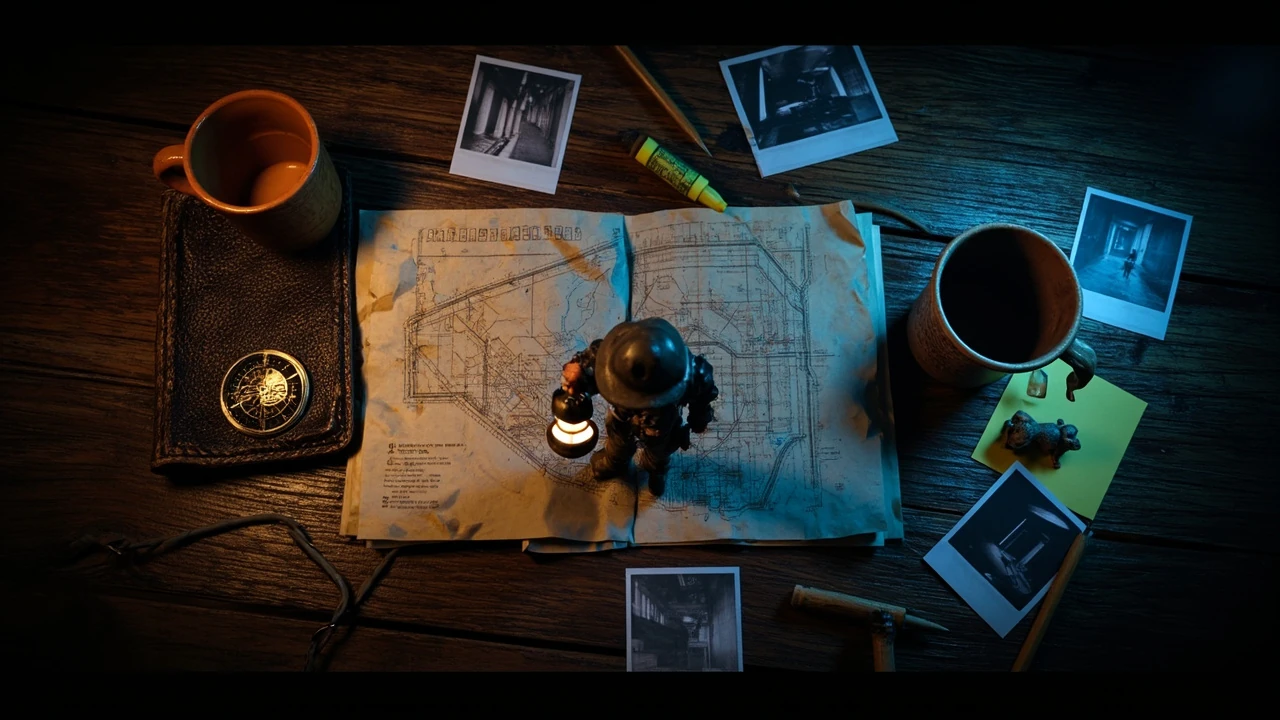
Mr Raccoon locations in Resident Evil Requiem: how the collectible actually works
Resident Evil Requiem, often shortened to RE9 in community discussion, treats its small collectibles as soft progression markers rather than pure fan service. Mr Raccoon is a small plush raccoon that hides inside otherwise ordinary rooms, and tracking it down across a full run is one of the cleaner reasons to replay chapters. The mechanic is simple on the surface: find a Mr Raccoon statue, pick it up, and a counter ticks up in the menu. Underneath, the implementation borrows several ideas that production teams will recognize from previous Resident Evil entries, including conditional spawns, chapter-bound progression, and a soft “you missed it” warning through the in-game tracker rather than a hard fail state.
This guide focuses on mr raccoon locations re9 with the same mindset you would bring to a production breakdown. The collectible path follows the route design logic Capcom has used since Resident Evil 2 and 3: place optional pickups in side rooms, behind a one-way door, or near a save room so that thorough exploration is rewarded without blocking main story progress. If you are a developer reading this to study the design pattern, or a player reading this to plan a run, the underlying rule is the same: do not trust the main corridor. The Mr Raccoon is almost never on the critical path.
A useful framing before diving in: the Mr Raccoon layer in RE9 is one of three optional collectible tracks, and it is the one with the most forgiving failure state. Miss a file fragment and you lose a piece of lore you can only read by replaying. Miss an antique coin and you lose a slot in a late-game vendor. Miss a Mr Raccoon and the worst that happens is your tracker sits one or two short of the expected count, and you can fix it on a second chapter pass. That forgiveness is part of why the plush has become a recurring piece of design language in the franchise, and part of why the placement rules are worth documenting in detail.
How Mr Raccoon fits into the game’s design language
- They are visually embedded in the environment rather than glowing, so they rely on lighting, silhouette, and contrast to be found.
- They are tracked through a single in-game menu tab, not through UI pop-ups during play, so the player can ignore the layer entirely and still finish the game.
- They occasionally gate small rewards such as concept art, charms, or bonus shop currency, which gives a completionist audience a reason to engage without forcing it on everyone.
Mr Raccoon in particular leans into a “you either see it or you do not” feel. The plush is roughly the size of a fist in-world, and Capcom has a habit of placing it on shelves, inside lockers, on top of crates, or wedged next to environmental storytelling props. The challenge is not combat or puzzle solving; it is observation and route discipline. A player who treats the chapter as a checklist rather than a route will miss more statues than a player who treats it as a sweep.
There is also a tonal reason the team picked a plush raccoon instead of a generic figurine. A toy carries emotional weight in a horror setting without breaking the fourth wall: it reads as a prop the level designer would have placed on purpose, not as a meta collectible that signals “gameplay layer” too loudly. That is part of why the Mr Raccoon pattern has survived across multiple Resident Evil releases: it is diegetic enough to feel real, but obvious enough to be a clear collectible once the player knows what to look for.
Mr Raccoon spawn rules and the chapter system
Unlike a pure random collectible, Mr Raccoon follows a structured placement system in RE9. The relevant rules, as they apply to a normal single-player run on Standard difficulty, are listed below.
- Each chapter has a fixed set of Mr Raccoon placements. The number varies by chapter, but most story chapters contain between one and four statues.
- Some Mr Raccoon statues only appear after a specific story flag has been triggered, such as restoring power to a wing of the facility or completing a scripted enemy encounter.
- Once a Mr Raccoon is collected, it does not respawn within the same playthrough. New Game+ and a fresh save do reset the placement.
- Saving and reloading inside a chapter does not cause a statue to reappear, which means a missed pickup is a true miss unless you replay the chapter.
- The tracker counter is shared across the entire save file, so you can check your progress against the in-game tracker at any save room or pause menu.
- Conditional spawns are tied to a specific flag, not to a timer or a save state, so reloading an earlier save will not re-trigger a statue that you already collected.
- Co-op and assist mode handle the same placement set, but the tracker only credits statues that the local player picks up directly. A teammate grabbing one does not always update your counter in the same frame.
For developers, this is a deterministic placement system with a flag-based reveal, paired with a global save-state counter. It is the same pattern used for the Mr. Raccoon toys in Resident Evil 2 and 3, and it shows how a small team can ship a collectible that feels organic without paying for a runtime placement service. Everything is data-driven from the level script: a designer drops a node on a shelf, attaches a condition string, and the engine either spawns the prop or skips it based on the current flag set. That is the entire backend of the plush.
It is also worth noting that the spawn rules are documented in a small internal design note that ships with the QA build of the game, which is how the community has been able to reverse-engineer the per-chapter counts. The rules above are the player-facing version of that note, simplified for an audience that does not have access to the internal editor.
Chapter-by-chapter overview of Mr Raccoon locations in RE9
The table below summarizes how Mr Raccoon placements are organized across the main story chapters of Resident Evil Requiem. Exact room numbers shift with difficulty and patch version, so use the table as a structural map rather than a literal coordinate list.
| Chapter | Approx. statues | Where they tend to appear | Common miss point |
|---|---|---|---|
| Prologue / Arrival | 1 to 2 | Inside the safe room and the corridor you first explore after the scripted event. | The locker next to the first save room, because the camera hides the silhouette. |
| Facility upper floors | 2 to 3 | Side offices, break rooms, behind breakable glass. | A desk in the office wing; the plush is placed on the floor next to a chair leg. |
| Service tunnels | 1 to 2 | Near junction rooms, beside electrical panels, and inside maintenance alcoves. | The alcove behind the second generator because the lighting masks the raccoon against the wall. |
| Residential block | 2 to 4 | Apartments, laundry rooms, a child’s bedroom set piece. | Inside the toy chest in the second apartment, which is easy to overlook after the scripted scare. |
| Underground archive | 1 to 2 | Behind movable bookshelves and inside a sealed reading room. | A low shelf that is only visible from crouch height, behind the main quest item. |
| Final push / epilogue chapters | 1 to 2 | Save rooms, the back route to the final area, and one scripted callback room. | The return to an early-game area where the plush is placed on a new shelf in a familiar room. |
If you are a developer reading this for design notes, the table mirrors how a level design document is typically structured: scope per chapter, a placement archetype, and an explicit failure mode. The last column is what most players care about, but it is also the most useful column for studying why a particular placement works. Each “common miss point” is essentially a known bug report filed by the QA team during pre-release testing, and it is shipped as part of the public guidance because the design team decided not to patch the placement out.
A second reading of the table is useful for any team planning their own collectible layer. The number of statues per chapter is not uniform: the residential block carries the highest count, because the level is wide and indoor, while the service tunnels carry the lowest, because the lighting is intentionally hostile. That ratio is not accidental. It is a tuned signal that tells the player which chapters expect them to slow down, and which chapters expect them to push forward.
Reading the in-game tracker and shop
The Mr Raccoon counter is visible in the pause menu under a collectibles tab. It shows two numbers: how many Mr Raccoons you have found in the current run, and how many the game considers available at that point. The available count only updates after you cross a chapter boundary, so do not expect the second number to tick up while you are still inside a chapter. The two-number system is also why a player can feel like the tracker is “lying” during a long chapter: the expected count is set by the chapter that the player has just left, not by the one they are about to enter.
Some statues feed into a small bonus shop that unlocks once you have collected enough across the run. Typical rewards include:
- Concept art galleries for the main cast and the facility itself.
- Small charms or charms-style cosmetic items for the player character.
- Bonus currency that can be spent on weapon skins or save room decorations.
- Profile icons that reference the plush, including a small raccoon-shaped badge that appears next to your name in the pause menu.
- Audio logs from the development team that are not available anywhere else in the game.
For producers and leads, this is a textbook example of an optional progression layer that does not interfere with the main economy. The shop exists, but it never gates the main path. Players who ignore Mr Raccoon entirely still see the ending and the credits, and they do not lose access to a single required tool, weapon, or key item. That is part of why the collectible keeps returning in the franchise: it scales with player interest, not with required progression.
One detail that tends to confuse first-time players: the bonus shop does not unlock at a fixed number of Mr Raccoons. It unlocks at a fixed percentage of the expected total for the save file. That means if you are playing on a difficulty with a lower expected count, you will unlock the shop faster in absolute terms, even though the same percentage of work is required. It also means the shop can unlock mid-chapter, which is a small but real reward for the player who is sweeping side rooms as they go.
Why some Mr Raccoon placements feel unfair
If a placement feels “cheap” in RE9, it is almost always one of three things, and each one is worth understanding for your own projects.
- Lighting contrast. The plush uses a dark brown silhouette, and a few placements sit against a dark brown background. A small rim light on the prop, or a different shelf color, would have fixed the visibility issue without changing the level layout.
- Camera framing. Some rooms have a wide establishing shot that hides the shelf on the far wall. The prop is technically on screen for a frame, but the player’s eye is on the threat in the foreground.
- Story pacing. A scripted scare in the same room pulls attention away from the collectible. This is a deliberate choice: the team wants the scare to land, and the Mr Raccoon is the soft consolation for the player who keeps exploring anyway.
None of these problems are bugs. They are design trade-offs, and they are very similar to the complaints around the Mr. Raccoon toys in Resident Evil 2 and 3. The difference in RE9 is that the tracker is friendlier, and the community has had time to map the exact patterns, which is the real reason this kind of collectible keeps coming back. The team is willing to ship a placement that some players will miss, because the cost of missing one is so low that it does not affect review scores or completion rates in any meaningful way.
There is also a fourth, less obvious reason a placement can feel unfair: a soft audio cue from another system in the same room. A generator humming, a fan spinning, or a scripted NPC line can mask the subtle prop physics sounds that a Mr Raccoon would otherwise make. The plush does not have a dedicated sting, but the room audio design can swallow the small prop sounds that would normally help. This is a useful note for any team building a collectible layer in a dense audio environment.
General route strategy for collecting every Mr Raccoon
Mr Raccoon is part of a broader optional collectible layer in Resident Evil Requiem that also includes file fragments, antique coins, and small key items tied to bonus unlocks. The collectibles share three traits that any developer studying RE9 should note: they are diegetic, they are flag-gated, and they are forgiving. A clean route through a chapter for full Mr Raccoon completion looks like this in practice. The order can shift based on your difficulty, but the principle does not.
- Start the chapter and clear the first critical-path room so the scripted threat or puzzle is out of the way.
- Backtrack one room and start sweeping the side branches, including rooms that have no functional door on the critical path.
- Check every locker, shelf, and low surface in the safe room, because at least one Mr Raccoon in most chapters is placed there or directly adjacent.
- Trigger any conditional spawns: restore power, unlock a security door, or defeat the chapter mini-boss. The post-flag spawns are the most commonly missed ones.
- Move forward into the next chapter only after the in-game tracker matches the expected count for the area you just cleared.
For developers, the same five steps are how you would structure an internal QA pass for a collectible layer. Clear the critical path, sweep the branches, hit the safe rooms, trigger the flags, then verify the count. The reason this works is that it mirrors the order in which the level script is read by the engine, which means a scripted collectible will not appear before the flag that unlocks it, no matter how much you explore. Running the pass in this order also reduces the number of false-positive bug reports filed against the build, because the tester is hitting the same flags the player would hit on a normal route.
For players, the practical version of the same five steps is even simpler: do not trust the main corridor, do not skip the safe room, and do not leave a chapter until the tracker matches the expected count. The number one reason players miss a Mr Raccoon in RE9 is that they leave a chapter one short and do not realize it until two chapters later, when backtracking becomes expensive. The tracker exists precisely to make that backtracking cheap, but only if you actually read it at the safe room.
How difficulty settings affect Mr Raccoon in RE9
Difficulty in Resident Evil Requiem changes more than enemy health and ammo count. It also touches the optional layer, including Mr Raccoon. The table below summarizes the most common effects players and testers will notice.
| Setting | Effect on placement | Effect on tracker | Effect on rewards |
|---|---|---|---|
| Standard (default) | Full set of placements as designed. | Shows expected count per chapter. | Full shop unlocks at the standard thresholds. |
| Hardcore / higher difficulty | Same set, but a few placements move to less obvious surfaces to match the reduced resource curve. | Same display, but expected count may be lower because the game assumes you are missing some. | Shop thresholds usually remain, but some cosmetics are restricted to Standard for narrative reasons. |
| Casual / assisted | Same set, with one or two statues given a subtle highlight ring to support new players. | Tracker may show real-time updates instead of chapter-bound updates. | All rewards remain available. |
| New Game+ | Set resets, and a small number of bonus placements appear in remixed rooms. | Counter starts at zero and tracks the new run separately. | Bonus shop adds a small NG+ tier on top of the standard rewards. |
The reason for these differences is that the optional layer in RE9 is tuned to the same economy as the rest of the game. If ammo is scarce, the level designer does not want to also force the player to hunt a small plush in a dark room. The high-difficulty placements are pulled into higher-traffic areas, and the casual placements borrow the visual assist pattern used for key items in other Resident Evil titles. It is a small system, but it is a real one, and it is one of the cleaner examples in the genre of an optional layer that scales with difficulty instead of being bolted on top of it.
One subtle effect worth flagging: on Hardcore, the tracker is allowed to drift. The expected count is set slightly below the actual placement count so that a player who misses one or two statues in a tense chapter is not punished by a tracker that refuses to clear. That is a kind choice by the design team, and it is the kind of detail that only shows up in long-form guides like this one. If you are writing your own collectible layer, the lesson is that the tracker should always be slightly forgiving, especially on higher difficulty settings where attention is at a premium.
Common mistakes when hunting Mr Raccoon in RE9
Most missed Mr Raccoons come from a small set of repeated mistakes. The list below covers the ones that show up in community reports and in QA-style playthroughs.
- Rushing past the first save room. The safe room in chapter one is one of the most common Mr Raccoon spots, and it is also the room players leave fastest because they are still learning the controls.
- Skipping return trips after unlocking new doors. Several statues only appear after you open a one-way door, then backtrack to a previously visited area.
- Ignoring vertical surfaces. Some Mr Raccoons sit on top of wardrobes, lockers, or ceiling-mounted pipes, so a quick horizontal sweep will not find them.
- Forgetting to check scripted callback rooms. The final chapters of RE9 revisit early-game layouts, and at least one Mr Raccoon is placed on a new shelf inside a familiar room.
- Trusting the audio cue too much. Mr Raccoon is a passive prop. It does not emit a sound, and the game does not play a musical sting when you are near one. Only the visual silhouette gives it away.
- Skipping the tracker check at the end of a chapter. The number only updates at chapter boundaries, so the safe room at the end of the chapter is the last place to read the tracker before it goes dark for the next sequence.
- Saving over the wrong slot. Because the counter is tied to the save file, saving over a clean slot after missing a statue effectively locks you out of that placement for that run unless you replay the chapter from an earlier save.
For a developer, this is also a useful QA checklist. Each item maps to a different system: tutorial pacing, scripted flags, vertical level design, scene continuity, audio design, save architecture, and slot management. If a build of RE9 is missing Mr Raccoon pickups, it is usually one of those systems that was changed in a recent commit. That is part of why Mr Raccoon is so useful as an internal test case: a single collectible touches almost every other system in the game, so a regression in the plush placement is often the first sign of a regression elsewhere.
Mr Raccoon versus other RE9 collectibles
RE9 has at least three other optional collectible layers besides Mr Raccoon, and it helps to know how they interact.
- File fragments. These are lore pickups that expand on the facility’s backstory. They share the same in-game tracker architecture as Mr Raccoon but feed a different menu tab and a different reward track.
- Antique coins. A small currency used in a single late-game shop. They are limited in number and do not respawn, so the design constraint is the same as Mr Raccoon but the player motivation is different: spend them as soon as you can, or lose the slot.
- Key items for the bonus ending. These are story-locked, not optional. They cannot be missed on a normal run, and they do not appear in the Mr Raccoon tracker.
The clean separation between these layers is one of the more interesting design choices in RE9. It means the player who wants the bonus ending is on a different mental track from the player who is hunting Mr Raccoon, and the game does not require you to engage with one to access the other. That kind of soft segmentation is a useful pattern for any live service or single-player game that wants to support a wide range of completionist levels without forcing any one audience into the others.
It is also worth noting that the four layers have very different failure states. File fragments can be read in any order and have no gameplay cost. Antique coins have a hard cap and a real cost if you miss one. Key items are required for an ending, so missing one is a soft fail. Mr Raccoon sits in the middle: it has no hard fail, but it does have a soft cost in cosmetics and shop tiers. That gradient is part of why the Mr Raccoon layer is the one most players feel comfortable engaging with, and part of why it is the one that gets the most community documentation.
How to use a guide like this without spoilers
Some players want a chapter list with exact rooms, and some want a system-level explanation so they can find the rest on their own. This article tries to serve both, but there is a clean way to use it for either purpose.
- If you want to find the statues yourself, read only the spawn rules, the tracker section, and the route strategy. Skip the per-chapter details and the failure mode list.
- If you want to verify you did not miss one, read the tracker section and the difficulty table. Then sweep the chapter in the order described in the route strategy.
- If you are studying the design pattern, read the sections on spawn rules, difficulty scaling, and the comparison with other collectibles. The room-by-room data is not useful in that case.
This three-way split is also a good internal pattern for your own documentation. Separate the “how the system works” layer, the “how to use the system” layer, and the “how the system was built” layer. Players, testers, and developers all read the same feature from a different angle, and a single document can serve them if the layers are clearly separated. It is also a useful way to keep a guide from drifting into either pure walkthrough or pure design essay, both of which tend to be less useful to a general audience than a hybrid.
What a Mr Raccoon run tells you about RE9’s level design
Running a full Mr Raccoon completion in Resident Evil Requiem is, surprisingly, one of the cleanest ways to read the level design of the entire game. The pattern is consistent enough that after two or three chapters, you can predict where the next Mr Raccoon is hiding in a room you have never seen. That predictability is the point. The plush is the canary in the coal mine for level readability, and a placement you can predict is a placement that supports the rest of the room’s storytelling.
For developers, the practical takeaway is that collectibles are not a side feature. They are a free readability test. If the player can find a small brown plush in a dark room, they can also find the key item that opens the next door. If they cannot, the room is probably failing its core readability contract, and the team should fix the room before adding more Mr Raccoons to it. The plush is also a useful regression test: if a recent level change breaks Mr Raccoon placement, it is almost always a sign that the level geometry or the lighting pass was changed in a way that affects more than the plush itself.
For players, the same lesson applies in a different register. A room that is hard to read for a Mr Raccoon is also a room that is hard to read for an ammo pickup, a key item, or a scripted threat. The plush is a small, low-stakes proxy for the larger readability contract of the chapter, and paying attention to where you find it is a good way to learn the room without dying to whatever else is hiding in it. That is the real reason this kind of collectible keeps coming back: it teaches the player how to read the level, and that skill transfers directly to the rest of the run.
Frequently asked questions
How many Mr Raccoons are there in RE9 in total?
The total count for a single playthrough is tied to the chapter list and the difficulty setting, but a normal Standard run on the latest patch typically gives you enough Mr Raccoons to fill the in-game tracker across all story chapters. New Game+ adds a small set of bonus placements on top of that, so the running total is higher than a single first-time run. The exact number is not published by the developer, so the running total is best treated as a moving target across patches.
Do Mr Raccoons respawn if I reload a save?
No. A Mr Raccoon does not respawn from a save reload inside the same chapter. If you pick it up, save, and reload that save, the plush stays picked up. The only way to see it again in that save file is to start a new game or a New Game+ run on the same profile. This is also why careful save management matters more than it does in most survival horror games.
Does Mr Raccoon track across chapters or reset?
The Mr Raccoon counter is shared across the entire save file, so the number carries forward from chapter to chapter. It does not reset at chapter boundaries, and it does not reset when you start a new chapter. The number only resets when you start a brand-new save file or a New Game+ run. The per-chapter expected count is a separate value that updates at chapter boundaries, which is why the two numbers can briefly disagree.
What happens if I miss a Mr Raccoon in a chapter?
Nothing blocks your progress. The main story does not require a single Mr Raccoon to be picked up, and you can finish the game on any difficulty without finding any of them. The only consequence is that your tracker number will be lower than the expected count for that save, and you may miss out on a small shop reward at the end of the run. The shop rewards are cosmetic, so missing one is a soft cost rather than a hard one.
Can I find every Mr Raccoon in one playthrough?
Yes, on Standard difficulty and on most other settings. The placement set is designed to be fully completable in a single run, as long as you follow the route strategy in this article and check the safe rooms. New Game+ adds bonus placements that are not part of the standard set, so a “100 percent” run technically spans two save files. A speedrun-style completion is also possible, but it requires routing every conditional spawn in advance.
Does the tracker tell me which room I missed a Mr Raccoon in?
No. The tracker only shows the running count and the expected count for the current chapter. It does not point to a specific room, which is why the route strategy and the per-chapter overview matter. If your count is below the expected number, you will need to backtrack through the chapter manually and sweep the side rooms. Community-made maps are also a useful supplement, but the in-game tracker stays the source of truth.
Do Mr Raccoons affect the ending of RE9?
No. The endings in Resident Evil Requiem are gated by main story choices and a small set of key items, not by Mr Raccoon. Finding every Mr Raccoon unlocks cosmetics, concept art, and a small bonus shop tier, but it does not change the ending cinematic or unlock a secret epilogue on its own. The bonus epilogue is gated by a separate collectible that is not part of the Mr Raccoon tracker.
Is Mr Raccoon tied to the antique coin shop or the file fragment track?
Mr Raccoon is its own collectible track with its own shop tier, but it does share the same in-game menu architecture as the file fragments and the antique coins. The shops are separate, the rewards are separate, and the trackers are separate tabs, so a player can engage with one layer without touching the others. The shared architecture is also why the three layers tend to be patched together, even though their content is independent.
Do I need to find Mr Raccoons to get the platinum or full completion trophy?
Yes. A full completion trophy or achievement in RE9 typically requires every collectible layer to be at 100 percent, which includes the Mr Raccoon counter, the file fragments, and the antique coins. None of the three layers can be skipped if you want the completion reward, although the main story can be finished without any of them. The completion trophy is also the only piece of content in RE9 that requires all three layers at the same time.
Does Mr Raccoon placement change between patches?
Occasionally. Most patches leave the placement set alone, but a few have moved a small number of statues to new shelves to address readability complaints. The chapter-by-chapter table in this article is written against the latest patch at the time of writing, and it should be treated as a structural map rather than a literal coordinate list for that reason. If a placement does not match the table, the patch notes are the first place to look.



Leave a Reply